Traditional text-based learning contains within it certain assumptions about privilege. Throughout history, dominant groups traditionally had access to education, places or people who taught them to read and write. This reinforced their status as the dominant group, because as a literate class, they maintained control of print media, institutional power, and inevitably history, since their records were most often the ones left to us.
Women, the poor, and other marginalized groups were often not taught to read. Assumptions were made about the utility of educating those groups, let alone their ability and intellectual capacity -- in short, their educability.
In contrast, visual literacy represents a democratization of literacy. Provided that a person is born with the gift of sight, anyone can perceive and participate in communication of ideas through visual culture. Visual literacy is inherently subversive because it bypasses the normative channels of education and status.
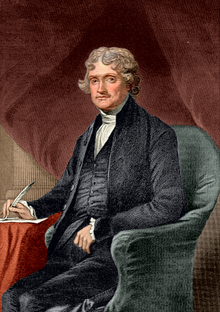
Privileged, educated person:

The masses:


Visual culture is all around us. According to Freedman and Stuhr, “visual culture is the totality of humanly designed images and artifacts that shape our existence” (816). It shapes our existence because when we read and process these images, our thoughts, feelings and behaviours are affected. For this reason, when we teach through the visual arts, we are helping students gain skills for navigating the world around them. It “helps students to recognize and understand the ambiguities, conflicts, nuances, and ephemeral qualities of social experience, much of which is now configured through imagery and designed objects“ (821). Teaching through visual literacy is universal because it is accessible by all, and as such it is a key means of communication and expression of ideas in our globalized world.
To me, the work of the French photographer JR personifies this shift in emphasis to visual literacy. He repeatedly harnesses the power and universality of visual literacy through his work. His influential project, Inside Out, began when he invited people all over the world to send him photos of themselves, which he returned to them as large format, black and white, pastable posters. Regardless of language or national origin, the subjects of his posters communicated feelings and ideas because of the way they chose to represent themselves and where they chose to hang their posters. The distinction between high and low art broke down -- the former graffiti artist now graced the front hall of the New York City Ballet with his work.
JR has embraced visual literacy as a main means of building a common language of protest and universality, and it’s important for teachers of the present generation to help our students grow in their visual literacy and participate in this mode of expression.
Paul Duncum. Visual Culture Isn't Just Visual: Multiliteracy, Multimodality and Meaning. Studies in Art Education A Journal of Issues and Research 2004, 45(3), 252-264

No comments:
Post a Comment